
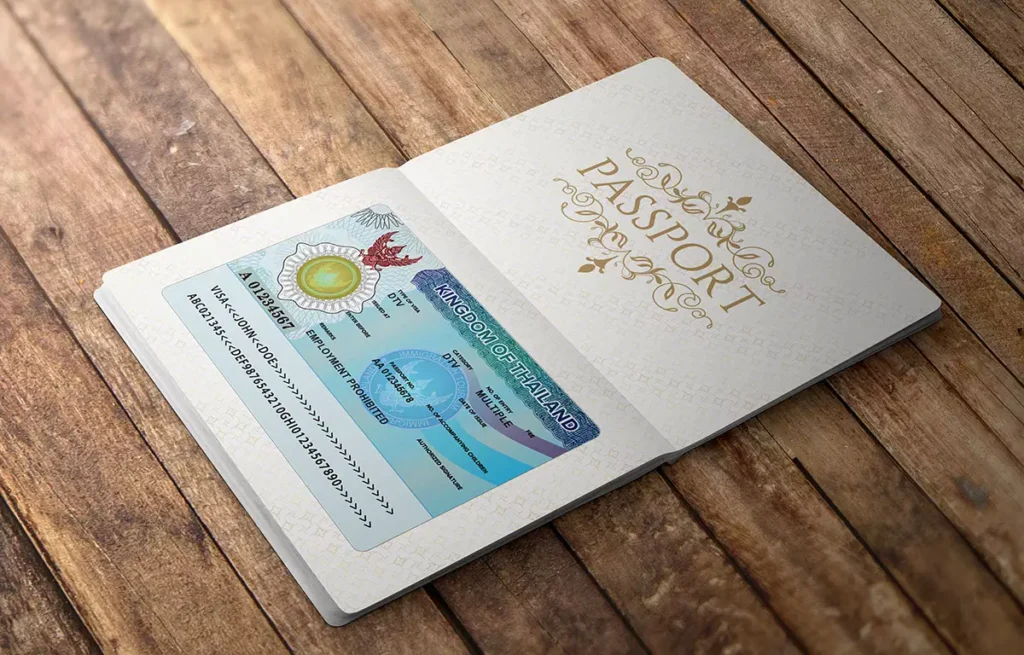
The Destination Thailand Visa or DTV Visa Thailand continues to serve as a practical multi-year option for remote professionals, independent contractors serving overseas clients, and participants in selected Thai cultural or wellness programs. Issued for five years with multiple entries permitted, the visa allows an initial stay of up to 180 days on each arrival. Before that period expires, holders may request a single extension of another 180 days at a Thai immigration office. After using both the initial stay and the extension, departure is required before the same visa can be used for a subsequent entry. Applicants should check the documentary requirements of the Thai Embassy or Consulate handling their application.
Eligibility Tracks Available in 2026
Two primary pathways remain open. The workcation track is intended for individuals whose income originates outside Thailand. Remote employees of foreign-registered companies, freelancers with non-Thai clients, and owners of businesses based abroad can qualify when they supply clear evidence such as employment contracts, client agreements, or a professional portfolio demonstrating the foreign source of their work. The visa does not authorize any form of employment with Thai companies or local clients.
The second track covers participation in recognized soft-power activities. Structured training in Muay Thai, Thai cooking courses, sports programs, medical treatment at licensed facilities, and certain approved cultural or seminar programs fall into this category. Applicants normally present an official enrollment or confirmation letter from the provider. Spouses and unmarried children under twenty may join as dependents; each family member submits a separate application and pays the corresponding fee. The minimum age for a principal applicant is generally twenty.
Financial Evidence and Core Supporting Documents
All applicants must demonstrate access to at least 500,000 Thai baht or the equivalent in another currency. Most embassies expect bank statements covering the preceding three months that reflect a consistent balance rather than a sudden large deposit made just before filing. In some cases a sponsorship letter from a family member, accompanied by the sponsor’s financial records and proof of relationship, is accepted. Pure investment statements or cryptocurrency holdings are typically not treated as primary evidence.
A valid passport with at least six months’ remaining validity and a recent photograph remain standard requirements. Activity-specific documents complete the basic package.
Document Rules Introduced on 31 August 2026
From 31 August 2026 onward, two additional items became mandatory for new applications. Applicants must now provide proof of permanent residence in the country from which the application is submitted, and a certificate of criminal record clearance issued by the competent authority of the applicant’s nationality or the country of application. These rules effectively require applicants to file through a Thai mission in their country of nationality or permanent residence. Third-country applications lodged while traveling on a short-term tourist status are no longer accepted. Applications completed and paid for before the cutoff continue under the earlier document list.
The precise form of residence proof and the maximum age of the police certificate vary by mission. Some embassies accept certificates issued within three months; others allow up to six months. Applicants should consult the checklist of the specific Thai embassy or consulate responsible for their application.
Application Process and Fees
The entire process takes place outside Thailand through the official electronic system. After creating an account, the applicant uploads the complete set of documents, pays the non-refundable fee (set by each embassy in local currency and generally equivalent to around 10,000 baht), and awaits a decision. Processing times vary by mission but often range from several days to a few weeks. Once approved, the visa is issued according to the embassy’s procedures.
On arrival, immigration officers stamp the initial 180-day permission. Extensions are handled later at immigration offices inside the country for a modest additional fee. The DTV itself does not accumulate time toward permanent residence; other visa categories and successive long-term extensions are needed for that path.
Applicants can begin their submission and review the latest mission-specific checklists directly on the official Thai e-Visa portal at thaievisa.go.th. Because individual embassies sometimes add local clarifications, verifying the page of the responsible mission remains essential.
Boundaries and Practical Considerations
The visa strictly prohibits work for Thai employers or engagement that would require a Thai work permit. Income earned from foreign sources may still create tax residency in Thailand once cumulative presence in a calendar year reaches 180 days, so holders planning longer stays should track their days carefully and seek independent tax advice where appropriate.
Incomplete or inconsistent documentation remains a leading cause of refusal. Gaps in bank history, unclear evidence of remote work, or failure to meet the post-August 2026 residence and police-certificate standards frequently result in rejection. Given that fees are non-refundable, careful preparation pays dividends.
The reduction of standard visa-exemption periods to 30 days for many nationalities, effective from mid-September 2026, has increased the relative attractiveness of the DTV for anyone seeking stays measured in months rather than weeks.
Official announcements and consular guidance related to the Destination Thailand Visa continue to appear on the Ministry of Foreign Affairs website at mfa.go.th. Cross-referencing those updates with the specific embassy checklist helps avoid surprises.
Why the DTV Retains Value
With shorter visa-exemption periods now standard for many nationalities, the five-year multiple-entry structure of the DTV provides a stable alternative for people whose work or personal projects fit its categories. The generous per-entry stay supports both focused working visits and longer seasonal presence, while the dependent provisions allow families to travel together. Soft-power participants gain a clear framework for combining training or treatment with extended time in the country.
When the chosen eligibility route matches the applicant’s actual circumstances, the financial evidence is clear and continuous, and the updated residence and character documents are in order, the Destination Thailand Visa functions as a reliable tool for multi-year access. Careful attention to the details of each mission’s requirements remains the most effective way to turn the framework into a successful application in 2026.
You might also enjoy

Child Adoption in Thailand
Child adoption in the Kingdom of Thailand is governed by

Business Visa in Thailand
For foreign professionals seeking to work or conduct commercial activities

Property Mortgages in Thailand
Property mortgages in Thailand are a central mechanism for securing