
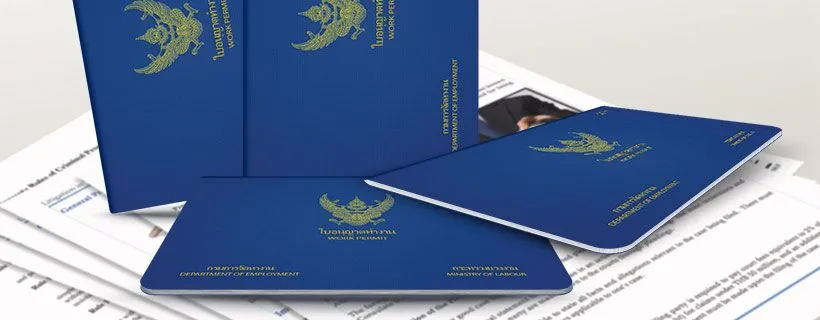
A Thai work permit is one of the most important legal documents required for foreigners who intend to work or conduct professional activities in Thailand. Thailand maintains strict labor regulations designed to protect domestic employment opportunities and regulate the presence of foreign workers. As a result, foreign nationals must obtain proper authorization before engaging in any form of work, regardless of whether the work is paid, unpaid, temporary, or performed under a foreign employment contract.
Foreign employment compliance in Thailand is not limited to the individual worker. Employers, sponsoring companies, and business owners must also comply with corporate, tax, and staffing requirements to qualify for the sponsorship of foreign work permits. Failure to comply can result in serious consequences, including fines, work permit cancellation, deportation, and business penalties.
This article provides an in-depth guide to Thai work permits, including the legal framework, what qualifies as “work,” eligibility requirements, documentation, issuance procedures, renewal rules, restricted occupations, and compliance strategies for both foreign employees and Thai employers.
Legal Framework Governing Thai Work Permits
Work permits for foreigners in Thailand are governed primarily by the Alien Employment Act Thailand, which defines the rules, restrictions, and penalties related to foreign employment.
The primary government agencies involved include:
- Department of Employment Thailand (Ministry of Labour) – responsible for issuing and regulating work permits
- Ministry of Labour Thailand – overseeing labor policy and enforcement
- Thai Immigration Bureau – regulating visa status, extensions of stay, and immigration reporting
Since employment and immigration are legally linked, work permits must be coordinated with the correct visa type to maintain lawful status.
What Is Considered “Work” Under Thai Law?
One of the most misunderstood legal issues in Thailand is the definition of “work.” Thai law interprets work broadly. A foreigner may be considered working if they engage in any activity involving:
- physical labor
- intellectual or professional services
- business management
- technical consulting
- administrative duties
- client-facing services
- supervising Thai staff
Importantly, a foreigner can be considered working even if:
- they are not receiving salary
- they are volunteering
- they are working for a foreign company remotely while physically in Thailand (depending on circumstances)
Because of this broad interpretation, many foreigners unintentionally violate Thai law by performing business-related activities without authorization.
Relationship Between Work Permit and Visa
A Thai work permit is not a visa, and a visa is not a work permit. Most foreign workers must have both.
Common Visa Category
The most common visa used for work permit issuance is the Non-Immigrant “B” visa (business visa).
The typical legal sequence is:
- obtain Non-Immigrant “B” visa from a Thai embassy abroad
- enter Thailand
- apply for work permit with the Department of Employment
- apply for a one-year extension of stay based on employment
- maintain compliance through renewals and reporting
Without the correct visa status, a work permit application may be rejected.
Who Needs a Thai Work Permit?
A Thai work permit is required for most foreign nationals who:
- work as employees in Thailand
- act as directors or managers in Thai companies
- provide consulting or professional services
- engage in technical installation or specialized work
- work in schools, hotels, factories, or corporate offices
Even short-term foreign technicians may require special authorization or urgent work permit arrangements.
Employer Eligibility Requirements
Thai authorities assess whether the sponsoring company is qualified to employ foreigners. Although standards vary by business type, common requirements include:
1. Registered Capital Requirements
A Thai company generally must have:
- THB 2 million registered capital per foreign work permit
Some industries may require more capital or additional documentation.
2. Thai Employee Ratio Requirements
In many cases, the company must employ:
- 4 Thai employees per 1 foreign work permit holder
This requirement is often verified through Social Security Office filings.
3. Active Tax and Corporate Compliance
Authorities may review:
- corporate income tax filings
- VAT filings (if applicable)
- withholding tax submissions
- audited financial statements
- company office lease and photographs
- business license or sector-specific permits
A company that appears inactive or non-compliant may be refused work permit approval.
Foreign Applicant Eligibility Requirements
The foreign applicant must meet legal and practical requirements such as:
- valid passport
- correct visa category (typically Non-Immigrant B)
- education qualifications aligned with the job role
- professional experience supporting the position
- no prohibited immigration history or criminal concerns
In practice, authorities may reject applications where the job position appears to be easily filled by Thai workers or where the foreigner’s qualifications do not match the job description.
Restricted Occupations for Foreigners
Thailand maintains lists of occupations reserved for Thai nationals. While the list may change through ministerial regulations, common restricted categories include:
- manual labor and unskilled work
- agriculture and farming
- street vending and small retail
- traditional Thai massage services
- tour guiding
- certain construction-related trades
- beauty and hairdressing services
Foreigners cannot legally obtain work permits for prohibited occupations, and attempting to do so can lead to enforcement action.
Work Permit Application Process
Step 1: Preparation of Employer Documents
The sponsoring company must prepare key corporate documents, commonly including:
- company registration certificate and affidavit
- shareholder list
- VAT certificate (if applicable)
- corporate tax filings and financial statements
- employee list and Social Security filings
- office lease contract and map location
- director ID and authorized signature documents
Step 2: Preparation of Employee Documents
The foreign employee typically submits:
- passport copies and visa stamp
- recent photographs
- medical certificate issued in Thailand
- resume or CV
- education certificates and transcripts
- professional reference letters (often requested)
Certain documents may require translation into Thai and legalization if issued abroad.
Step 3: Submission to the Department of Employment
The application is filed with the Department of Employment in the province where the company is located.
Processing time varies, but work permits are commonly issued within several business days to a few weeks depending on the complexity.
Step 4: Work Permit Issuance
Once approved, the work permit will specify:
- employer name
- job title
- job description
- work location
- validity period
The foreign employee must comply strictly with these conditions.
Work Permit Conditions and Limitations
Thai work permits are restrictive. A foreign employee may only work:
- for the employer named in the permit
- in the approved job position
- at the approved workplace location
If the foreigner changes job role, work location, or employer, the permit must be amended or re-issued.
Common violations include:
- working at a different branch office not listed
- performing duties outside the permitted scope
- working for a second employer without authorization
Even small changes may require formal approval.
Work Permit Validity and Renewal
Work permits are usually issued for a period aligned with the visa extension, commonly:
- 1 year validity
Renewal requires continued compliance by both employer and employee, including:
- updated tax filings
- proof of salary payments
- Social Security compliance
- continued Thai employee ratio compliance
- updated company financial status
Failure to maintain corporate compliance is a major reason for renewal refusal.
Termination and Work Permit Cancellation
When employment ends, the work permit must be canceled. This process usually involves:
- employer notification
- return of the work permit book (if applicable)
- cancellation of visa extension or conversion to another visa type
If cancellation is delayed, the foreign employee may become vulnerable to overstays or legal complications.
Penalties for Working Without a Work Permit
Penalties for Foreign Workers
A foreigner working illegally may face:
- fines
- imprisonment
- deportation
- blacklisting and entry bans
Penalties for Employers
Employers hiring foreigners illegally may face:
- fines per foreign worker
- criminal liability
- business investigation and enforcement action
Thailand’s labor enforcement has become increasingly strict in many sectors.
BOI Work Permit Advantages
Companies promoted by the Thailand Board of Investment (BOI) may benefit from streamlined processes, including:
- reduced documentation
- faster approvals
- access to One Stop Service Centers
- greater flexibility in hiring foreign specialists
This is particularly relevant for technology, manufacturing, and large investment projects.
Compliance Strategy and Best Practices
Foreign employees and employers should implement strong compliance procedures, including:
- ensuring work begins only after permit issuance
- tracking renewal deadlines early
- ensuring job description matches actual duties
- maintaining proper payroll and withholding tax records
- ensuring Immigration reporting compliance (90-day reporting)
- maintaining accurate corporate filings and Social Security contributions
Employers should also prepare for possible inspections and maintain updated records at the workplace.
Conclusion
A Thai work permit is a mandatory legal requirement for most foreign nationals who intend to work or conduct professional services in Thailand. It is governed by the Alien Employment Act and regulated through the Department of Employment, while immigration compliance is enforced by the Thai Immigration Bureau. Obtaining and maintaining a work permit requires coordination between visa status, corporate compliance, and strict adherence to approved job duties.
For foreign professionals and Thai employers alike, the most important principle is compliance: foreigners must work only within the scope of the permit, and companies must maintain sufficient capital, staffing ratios, and tax filings. With proper documentation, legal planning, and ongoing compliance management, a Thai work permit can provide a secure foundation for lawful employment and long-term residence in Thailand.
You might also enjoy

Personal Data Protection Act
Personal Data Protection Act. The rapid expansion of digital commerce,

Thai Business Partnership
A Thai business partnership is one of the most commonly
Thailand Permanent Residency
Thailand Permanent Residency (PR) is a highly sought-after immigration status